State of emergency declared · 21 Sept 2026
El Niño 2026: How to Prepare in California
What the governor's declaration does, where to get sandbags in 43 California counties, and the flood insurance timing most people learn too late.
Reviewed by Aaron J. Farmer, licensed flood specialist CA License #0L75450 · Last reviewed September 23, 2026
On 21 September 2026 Governor Newsom proclaimed a state of emergency to prepare California for what NOAA now expects to be an exceptionally strong El Niño. This page covers the practical side: what the declaration does, what you can do this week, and the insurance timing most people only learn about once it is too late.
Short on time?
Jump to the county-by-county sandbag directory or the prep checklist, or print the one-page version for your fridge.
Where things stand
NOAA’s Climate Prediction Center issued its latest outlook on 10 September. It puts the chance of a very strong El Niño this fall and winter at greater than 90%. Ocean temperatures in the key monitoring region were running 1.8°C above normal in August. The CPC also gives a 75% chance that October–December exceeds every El Niño on record since 1950.
A strong El Niño raises the odds of a wet winter. It does not guarantee one. Southern California has historically felt the effect most. In eight of the last ten moderate-to-strong events, it landed in its wettest third of years. The 2015–16 event is the reminder that the odds are not a promise: it was just as strong and still came in below average. Plan for the likely case without assuming it. Our longer explainer on El Niño and California flood risk covers the forecast in depth.
What the state of emergency does, and does not do
The proclamation puts the state on a preparedness footing. It directs agencies to pre-position flood-fighting supplies such as sandbags and pumps. It tells Caltrans to stage road-closure equipment on the highways most at risk and readies the National Guard for flood and rescue missions. It also fast-tracks permits for local agencies doing flood-control work.
It is not a household assistance program. It does not provide direct payments to residents, and it does not change how flood insurance works or how quickly it takes effect. Those rules are the same as they were last month. Sandbags for residents come from your county, city and local fire stations, the same as in past storm seasons. Our county directory links the official source for each.
What California’s Insurance Commissioner is telling homeowners
On 22 September, Insurance Commissioner Ricardo Lara urged Californians to review their insurance coverage before what the Department of Insurance calls “likely historic” El Niño storms. The Department’s key points line up with what we tell clients every day:
- Most homeowners and renters policies do not cover flooding, mudslides or debris flows. One exception to ask your insurer about: mudflow caused by a recent wildfire may be covered under the fire policy.
- Flood insurance generally takes effect 30 days after purchase. The exception is coverage required by a lender when you buy a home.
- Wind-driven rain and fallen trees are generally covered by a standard homeowners policy. Rising water is not.
- Check your car insurance. Comprehensive coverage on an auto policy may cover flood and storm damage to your vehicle. Liability-only policies do not.
- Make a home inventory and keep copies of your policy documents somewhere you can reach them.
If you have a question or a complaint about an insurer, the Department of Insurance consumer hotline is 1-800-927-4357.
Where to get sandbags in California, county by county
Most California counties offer sandbags, sand, or both, usually through fire stations, public works yards or the county Office of Emergency Services. What you actually get varies more than most people expect. Some counties hand out filled bags. Some give free sand and ask you to bring your own bags. A few supply them only after an emergency is declared. And county sites often serve unincorporated areas only, so if you live inside a city, check your city’s program as well.
The table below covers 43 counties, with the official source for each. Many counties open their sites only when the storm season starts or heavy rain is forecast, and several lists have not yet been updated for 2026–27. Always confirm with the site before you go. If your county isn’t listed, see Cal OES’s statewide sandbag roundup, or call 2-1-1.
Jump to your county
Alameda Butte Contra Costa Del Norte El Dorado Fresno Humboldt Imperial Inyo Kern Kings Lake Los Angeles Madera Marin Mendocino Merced Mono Monterey Napa Nevada Orange Placer Riverside Sacramento San Bernardino San Diego San Francisco San Joaquin San Luis Obispo San Mateo Santa Barbara Santa Clara Santa Cruz Shasta Solano Sonoma Stanislaus Sutter Tulare Ventura Yolo Yuba
Southern California
| County | What’s available | Official source |
|---|---|---|
| San Diego | Free bags and sand at County Public Works, County Fire and CAL FIRE sites for unincorporated areas. Cities run their own. Bring a shovel and call ahead. | AlertSanDiego |
| Los Angeles | Free at LA County Fire stations. Use the address lookup to find one. City of Los Angeles residents: the LA Fire Department runs a separate program. | LA County Public Works |
| Orange | Up to 50 free empty sandbags per resident from OC Public Works, 1 October to 30 April. Not for contractors or businesses. | OC Public Works |
| Riverside | A limited supply of empty bags at CAL FIRE / Riverside County Fire stations. Many cities run their own sites. | RivCoReady |
| San Bernardino | County Fire stations and city public works yards. Station supply is a limited emergency reserve, so the county advises not relying on it. | San Bernardino County Fire |
| Ventura | Sandbag stations at 24 Ventura County Fire stations. Be ready to fill your own. | Ventura County Fire |
| Santa Barbara | County Flood Control yards plus local fire and service districts. Bags come unfilled, with a limit of 25 per person. Service starts 1 November. | Santa Barbara County Public Works |
| Imperial | Self-serve at County Fire stations. Bring a shovel. Supply is limited. | Imperial County |
Bay Area and Central Coast
| County | What’s available | Official source |
|---|---|---|
| San Francisco | Up to 10 free sandbags from SF Public Works. Bring proof of address and load them yourself. | SF Public Works |
| Santa Clara | Free filled bags for county residents at five Valley Water sites, 1 November to 15 April. Some sites ask for proof of residency. Cities run more sites. | Valley Water |
| Alameda | Up to 4 free bags per household, self-serve at any hour, from County Public Works yards in Hayward and Dublin (unincorporated areas). Bring a shovel. Cities run their own. | Alameda County Public Works |
| Contra Costa | Free bags and sand at County Public Works stations for unincorporated areas. Bring a shovel. The county’s 19 cities run their own. | Contra Costa County |
| San Mateo | County Public Works yards for unincorporated areas. Up to 15 pre-made bags per season, and self-fill is open around the clock. Cities run their own. | San Mateo County Public Works |
| Marin | Sites across the county, listed by the Office of Emergency Management. Some limit bags per household. Bringing a shovel is recommended. | Marin County OEM |
| Sonoma | County stations, mostly at fire stations, which open during weather events. Bags are not pre-filled. Bring a shovel. | SoCo Emergency |
| Napa | County fire stations and the Yountville yard, plus city programs. Sites generally open when extreme rain is expected. | Ready Napa County |
| Solano | Self-serve sand and sandbag sites in cities and unincorporated areas. Bring your own shovel. | Solano County OES |
| Santa Cruz | Fire stations, the County Public Works yard and Valley Churches United. Limit of 15, and no contractors. The 2026 list was updated 8 September. | Santa Cruz County |
| Monterey | Map of fire-district sandbag sites and county sand stockpiles. | Ready Monterey County |
| San Luis Obispo | Free sand at city and district sites. Bring your own bags and shovel. The county also lists stores that sell bags. | ReadySLO |
Sacramento and the Central Valley
| County | What’s available | Official source |
|---|---|---|
| Sacramento | County Water Resources sites for addresses in the county drainage area, mostly unincorporated. Use the address lookup. Sites are closed between seasons. | Sacramento County |
| Placer | The county now lists sandbags as available for purchase and links a location map. Check your city or fire district for free sites. | Placer County |
| Yolo | No county-run sites. The county refers residents to 2-1-1 and to cities and rural fire districts. | Yolo County OES |
| San Joaquin | No county-run sites. Cities including Manteca, Tracy, Lathrop and Lodi run their own. Call 2-1-1 or check your city. | City of Manteca (example) |
| Stanislaus | Empty bags and sand at County Public Works, plus nine city sites. Bring your own shovel. | Stanislaus County OES |
| Merced | County public works and fire station sites, open around the clock during extreme weather. Bring a shovel. | Merced County |
| Madera | Sheriff’s OES and County Fire sites. The 2026–27 list was posted 16 September. Supply is limited. City sites in Madera and Chowchilla serve city residents only. | Madera County OES |
| Fresno | Free empty bags for county residents from Public Works. Bring a shovel and fill them yourself. | Fresno County Public Works |
| Tulare | Loose sand and empty bags at county and city sites during storm season, shown on a map. | Tulare County |
| Kings | No-cost, self-service sites in the county and the cities of Hanford, Corcoran, Lemoore and Avenal. The official list dates from 2023. | Kings County |
| Kern | Sand only at 10 County Public Works stations. Bring your own bags and shovel. | Kern County Public Works |
| Sutter | Self-serve county sites. No more than 25 bags per property. Not for builders or commercial use. | Sutter County OES |
| Yuba | County fill stations with a limited supply, open during flood emergencies. | Yuba County OES |
| Butte | County Fire and Public Works sites. Bring a shovel. Limit of 10 bags per vehicle. The posted list is from a previous season. | Butte County |
Northern California and the Sierra
| County | What’s available | Official source |
|---|---|---|
| Shasta | Fire stations and the cities of Redding, Anderson and Shasta Lake. Most sites ask you to bring your own bags and shovel. | Shasta County |
| Humboldt | County supplies go to unincorporated residents only after a local emergency is declared, when sites are announced. Cities run their own stations. | Humboldt County |
| Mendocino | Sandbag stations are shown on the county’s MendoReady emergency map during storms. | Mendocino County |
| Del Norte | Self-serve sand and bags at the Fairgrounds during storms. Fill them yourself. | Del Norte County OES |
| Lake | The county’s list is of retailers that sell bags. The cities of Lakeport and Clearlake have run free stations, so check with your city. | Lake County |
| Nevada | Free sand at five sites, 1 November to 30 April. Bring your own bags and shovel. | Nevada County OES |
| El Dorado | Sheriff’s Office (bags) and Transportation (sand), released only when a National Weather Service flood warning is issued. The county advises buying your own ahead of time. | Ready El Dorado |
| Mono | Free sand and sandbags at seven Public Works sites. Staff do not fill or deliver them. | Mono County |
| Inyo | Fire stations and the county Road Department have supplied them in past storms. Confirm with Inyo County OES. | Cal OES roundup |
How to fill and place sandbags
- Don’t overfill. The state’s own guidance ranges from one-third full (California Department of Water Resources) to no more than two-thirds (Cal OES). About half full is a safe middle. Overfilled bags don’t seal against each other.
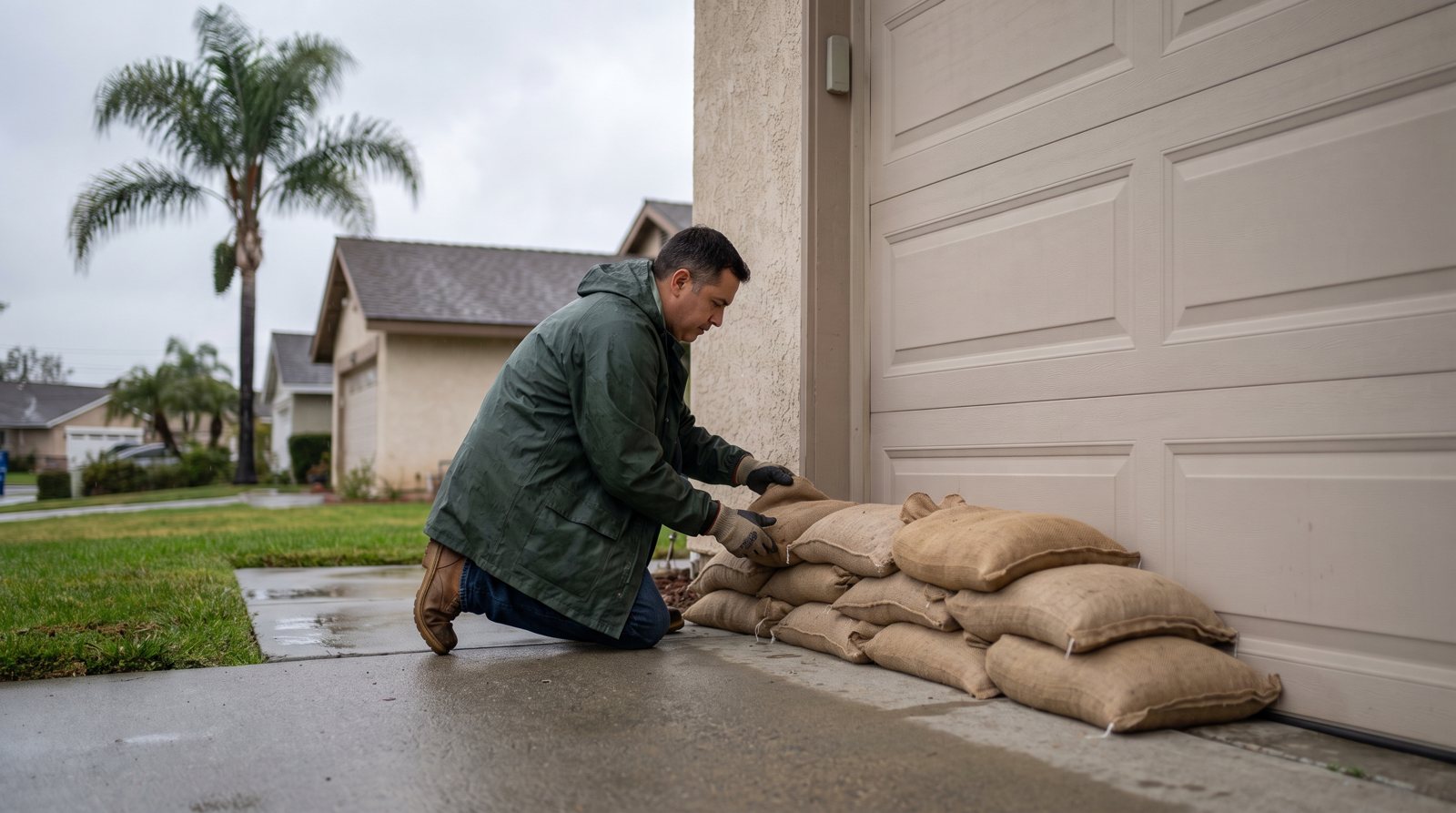
- Fold the top under and lay the bags like brickwork, staggering the seams of each layer over the row below. Stomp or tamp each one down to form a tight seal.
- Protect doorways, garage entries and low openings, or divert water away from the building. Don’t block storm drains or send water toward a neighbor’s property.
- Wear gloves, and ideally eye protection. Many sites supply bags and sand but leave the filling to you, so bring a shovel.
- Know their limits. Sandbags redirect shallow, moving water. They will not keep out standing floodwater or water rising through a slab. Never let sandbagging delay an evacuation.
Photograph everything, today

This is the single most useful hour you can spend before a flood. After a loss, a photo and video inventory is what an adjuster works from, and it is very hard to rebuild from memory.
- Photograph every room from the corners in wide angle, then walk through slowly on video with closets, cabinets and drawers open. Narrate as you go.
- Don’t skip the garage, attic and storage areas. That is where flood damage often starts.
- Take close-ups of brand, model and serial numbers on appliances, electronics and anything valuable. Photograph receipts if you have them.
- Upload it to the cloud, and email a copy to yourself. A phone in a flooded house is not a backup.
- Do the same with your insurance declarations page, policy number and your agent’s and carrier’s claims contacts.
Three things most people get wrong about flood risk
1. “I’m not in a flood zone, so I’m fine.”
According to FEMA, from 2014 to 2024 nearly one-third of NFIP flood claims (29%) came from outside high-risk flood areas. In a wet California winter, damage usually doesn’t come from a river overflowing. It comes from storm drains that can’t keep up, from ground already soaked by the last storm, and from runoff off wildfire burn scars. None of those follow flood-zone lines. A low-risk zone is lower risk. It is not no risk.
2. “My homeowners policy covers it.”
It almost certainly doesn’t. Standard homeowners and renters policies exclude flood. Flood coverage is a separate policy, and contents (your belongings) is often a separate line on it. Many people who do carry flood insurance have building coverage only, because that is all their lender required.
3. “I’ll buy it when the storms show up in the forecast.”
This is the one that catches people. A new policy from the National Flood Insurance Program (NFIP) generally has a 30-day waiting period before coverage starts. The 30 days count from the day you buy, not from the storm. There are narrow exceptions, such as a policy bought at the closing of a home purchase. Private flood policies are much faster: as little as 7 days with some carriers, and commonly 10. Neither covers a storm that is already on the radar. The time to decide is while the forecast is still dry.
What flood insurance typically costs
Flood insurance is often less expensive than people expect. For a California home in a low-risk zone, $250,000 of building coverage commonly runs about $450 to $700 a year in the policies we place. Your price depends on elevation, distance to water, rebuild cost, deductible and contents coverage. Homes in mapped high-risk zones cost more, sometimes considerably. Our cost-by-zone guide breaks down the drivers.
Your El Niño prep checklist
This week, while it’s dry
- Look up your address on FEMA’s Flood Map Service Center, and remember a low-risk result is not a no-risk result
- Photograph and video every room, and back the files up to the cloud
- Find out whether you have flood coverage, and whether it includes contents
- Check that your car insurance includes comprehensive coverage, which is what pays for flood damage to a vehicle
- If you’re buying coverage, do it now. The NFIP takes 30 days, and private policies take about 7–10
- Clear gutters, downspouts and the storm drain in front of your house
- Test your sump pump and its battery backup, if you have one
- Find your nearest sandbag site in the county directory above and pick up bags before the rush
Before the first big storm
- Write down a household evacuation plan with two routes out, including pets and medications
- Pack a three-day kit: water, food, medicine, flashlights, batteries, phone chargers, first aid
- Keep policy documents in a waterproof bag, with copies in the cloud
- Sign up for your county’s emergency alerts at CalAlerts.org
- Know how to shut off your electricity and gas
When a storm is forecast
- Place sandbags at doorways and low openings
- Move valuables, documents and electronics off the floor and upstairs if you can
- Move vehicles to higher ground
- Follow evacuation orders immediately. Never walk or drive through floodwater: six inches can knock you down, and a foot can float a car
Our full before-a-flood guide goes deeper on each step. If the worst happens, after a flood and our claim guide walk you through what to do next.
Common questions
Does the state of emergency give me money for flood preparation?
No. The proclamation directs state agencies to stage supplies, equipment and personnel, and to speed up permits for local flood-control work. It does not provide direct payments to households. Free sandbags are available through counties, cities and local fire stations, as they are in most storm seasons.
Are sandbags free everywhere in California?
No. Many counties hand out free bags, sand or both, but it varies. Kern and Nevada counties provide free sand only, so you bring your own bags. Placer and Lake counties list stores that sell them. Humboldt and El Dorado release supplies only once an emergency or flood warning is declared. County sites also often serve unincorporated areas only, with cities running their own. Check the county directory on this page, and confirm with the site before you go.
Where can I get free sandbags in San Diego?
The County of San Diego and CAL FIRE offer free bags and sand at fire stations serving unincorporated areas, and most cities run their own sites. The current list is at AlertSanDiego. Call ahead, and bring a shovel.
Where can I get free sandbags in Los Angeles?
LA County Public Works has an address lookup for county fire stations that stock free sandbags. Residents of the City of Los Angeles should check the LA Fire Department’s own program. In Orange County, OC Public Works provides up to 50 free empty sandbags per resident from 1 October to 30 April.
Where can I get sandbags in Sacramento and the Bay Area?
Sacramento County Water Resources runs sites for its drainage area, mostly unincorporated addresses, and opens them for the storm season. In the Bay Area, San Francisco Public Works gives up to 10 free bags with proof of address. Santa Clara’s Valley Water offers free filled bags from 1 November. Alameda, Contra Costa and San Mateo counties serve unincorporated areas, and their cities run their own programs.
Is it too late to buy flood insurance before El Niño?
Not yet. An NFIP policy bought today generally takes effect in 30 days. A private policy can take effect in as little as 7 days, commonly 10. What you cannot do is buy coverage for a storm that is already forecast, which is why the decision belongs in a dry week.
Do I need flood insurance if I’m not in a high-risk flood zone?
Nobody requires it, but FEMA reports that nearly one-third of NFIP claims from 2014 to 2024 (29%) came from outside high-risk flood areas. In low-risk zones, coverage is also at its least expensive.
Does my homeowners insurance cover flooding?
No. Standard homeowners and renters policies exclude flood damage. Flood coverage is a separate policy through the NFIP or a private flood insurer.
Sources: Office of the Governor, State of Emergency proclamation, 21 September 2026; California Department of Insurance press release, 22 September 2026; NOAA Climate Prediction Center ENSO Diagnostic Discussion, 10 September 2026; FEMA FloodSmart, historical NFIP claims 2014–2024; county sandbag pages linked above and Cal OES; sandbag guidance from Cal OES and the California Department of Water Resources. ENSO outlooks update monthly. This page reflects the outlook in effect on 23 September 2026.
Get a flood quote for your property
A licensed specialist compares available private markets and the NFIP, then explains the options in plain English — including when the NFIP is the better fit.